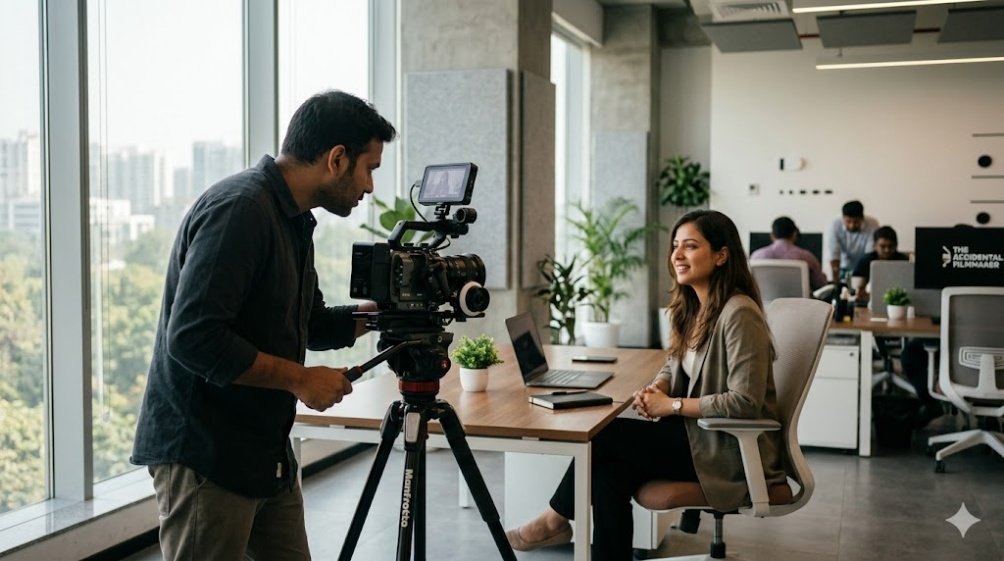
The traditional corporate video is facing a quiet extinction. For years, the default blueprint for an internal announcement, brand introduction, or client case study was completely rigid: a highly polished executive sitting in a rented studio, speaking in corporate buzzwords, layered over sterile, slow-motion footage of people smiling in pristine conference rooms.
The strategy was simple: spend a significant portion of the budget on a massive crew to make the company look important.
But as we navigate the modern digital ecosystem, a stark reality has emerged: audiences scroll right past the polish unless there is an authentic human story behind it. High production value is no longer a substitute for genuine human connection. The modern B2B buyer, stakeholder, or future employee seeks relatability, cultural alignment, and unscripted truth.
To bridge this gap, forward-thinking global brands are abandoning old-school corporate formulas and embracing Creator-Style Brand Films.
What is a Creator-Style Brand Film?
A creator-style brand film sits at the intersection of cinema-grade technical quality and the raw intimacy of digital content creators. It rejects the artificiality of traditional corporate media in favor of a documentary-driven, narrative-first approach.
| Attribute | Traditional Corporate Video | Creator-Style Brand Film |
| Primary Intent | To explain a business structure formally | To shape emotional perception and build trust |
| Core Structure | Scripted talking heads & generic B-roll | Unscripted, documentary-style human stories |
| On-Set Footprint | Large crews, heavy setups, high disruption | Lean, agile “ninja” crews, low disruption |
| Visual Philosophy | Overtly staged and clinical | Cinematic, organic, and grounded in reality |
| Audience Reaction | Passive viewing / Ad filtering | Active emotional engagement & social sharing |
The Strategic Failure of Bloated On-Set Footprints
The instinct to hire a massive production unit often stems from a fundamental misunderstanding of video ROI. In traditional film production frameworks, a large headcount was considered an insurance policy for quality. However, in corporate, technology, and startup environments, a massive crew actively damages the final product in three ways:
- The Intimidation Factor: Placing a non-professional subject—such as a tech founder, software engineer, or day-to-day app user—in front of a 15-person crew with giant lighting setups triggers performance anxiety. The result is a stiff, guarded delivery that feels rehearsed and artificial.
- Logistical Friction: Moving a large crew between corporate headquarters, regional offices, and field locations introduces significant scheduling drag. A multi-city shoot that should take 48 hours stretches into a week of logistical coordination, driving up accommodation, travel, and administrative overhead.
- Creative Dilution: When a creative direction must pass through an extensive hierarchy of on-set managers, gaffers, and assistants, the direct line between the director’s vision and the subject’s authentic voice is frequently lost in communication noise.
The Lean Architecture: Maximal Quality, Minimal Footprint
The democratization of high-end cinema tools has fundamentally altered what is mechanically necessary to achieve a world-class aesthetic. High-performance, low-footprint systems allow small teams to capture pristine, 10-bit color science and wide dynamic range without the logistical bulk of traditional gear packages.
By transitioning to a 1-person or 2-person “Ninja Crew,” a production shifts from an invasive event into a lightweight, highly responsive unit. This lean structural approach yields distinct operational advantages:
- Invisible Integration: A compact crew seamlessly embeds within an office environment or an end-user’s home without disrupting day-to-day workflows. The camera becomes incidental, allowing the subject to lower their guard and engage in an authentic, unscripted conversation.
- Hyper-Mobility: Smaller teams can pivot, travel, and re-setup within minutes. This allows a production to capture diverse, multi-city narratives within an incredibly compressed timeframe.
- Direct Communication: The filmmaker functions holistically across multiple roles—frequently managing the technical framework while simultaneously guiding the narrative path. This eliminates creative friction and ensures that the brand’s core message is captured cleanly in every frame.
Case Study Verification: High-Stakes Agile Execution
The viability of this minimalist, creator-driven model is proven through its adoption by global technology leaders. For the global Google for Startups narrative series, the objective was to capture how advanced AI models are impacting regional businesses and end-users across India.
Instead of deploying a traditional, high-overhead commercial unit, the entire campaign was executed utilizing a highly optimized, 3-person team led by an international director and managed locally on the ground.
- The ZuAI Project: Executed across multiple rapid-turnaround locations on a tight 2-day schedule. By keeping the crew compact, the team captured the technical business perspectives of the founders alongside the raw, emotional impact stories of the students using the platform, maintaining strict brand compliance throughout.
- The Entri Project: Spanned two distinct regions in Kerala—commencing with a half-day shoot in a rural district to capture user stories before transitioning to the corporate headquarters in Ernakulam for a 1.5-day intensive schedule. The lean configuration allowed for immediate multi-city transit, zero downtime, and high-fidelity 4K deliverables that aligned perfectly with global corporate benchmarks.
The Technical Foundations of Holistic Filmmaking
Operating a successful creator-style brand film architecture requires a deep synthesis of technical precision and artistic intuition. It demands a holistic filmmaker who can manage the technical pipeline end-to-end without relying on a large support staff.
- System Agnosticism: Rather than relying on a fixed, personal equipment locker, the technical blueprint should be designed entirely around the project’s specific distribution needs. Whether utilizing highly mobile configurations for run-and-gun documentary settings or scaling up to large-format cinema arrays for high-concept visuals, the gear must serve the story.
- Advanced Digital Workflows: Managing data safely within a lean crew requires rigorous DIT (Digital Imaging Technician) protocols. Utilizing rapid cloud-proxy ingestion workflows ensures that international stakeholders and creative directors can review 10-bit files remotely, establishing an instant feedback loop across global time zones.
- Cultural and Logistical Synchronization: True production efficiency on the ground requires a profound understanding of local landscapes, municipal permit requirements, and regional cultural nuances. A partner who can navigate local regulations while maintaining a clear view of global corporate expectations is a structural necessity.
Summary: Designing Your Next Brand Narrative
If your brand is preparing to launch a new product, showcase a customer success story, or present a corporate milestone, the question shouldn’t be how large a crew you can afford, but how lean you can structure the set to capture the truth of your narrative.
With over 12 years of industry experience and a background deeply rooted in technical execution, I have led more than 500 successful projects built entirely on this philosophy of high-agility, high-fidelity filmmaking. Through Sveccha Productions, we provide global clients with an elite, transparent, and completely scalable line production partner across India.
Stop paying for production bloat. Let’s build a cinematic, human-centric film that your audience will actually want to watch.
Connect with Ritesh Jairaj to Discuss Your Production